Broken but not defeated
Broken English - A Marianne Faithful Documentary Directed by Iain Forsyth

The goal of this documentary about the singer-songwriter and pop icon Marianne Faithfull is to strip away the layers of propaganda and misinformation that a misogynistic 1960s and ’70s media used to obscure her talent. The film succeeds. I walked away with a deepened admiration for Faithfull’s songs—particularly her songwriting and artistic bravery.
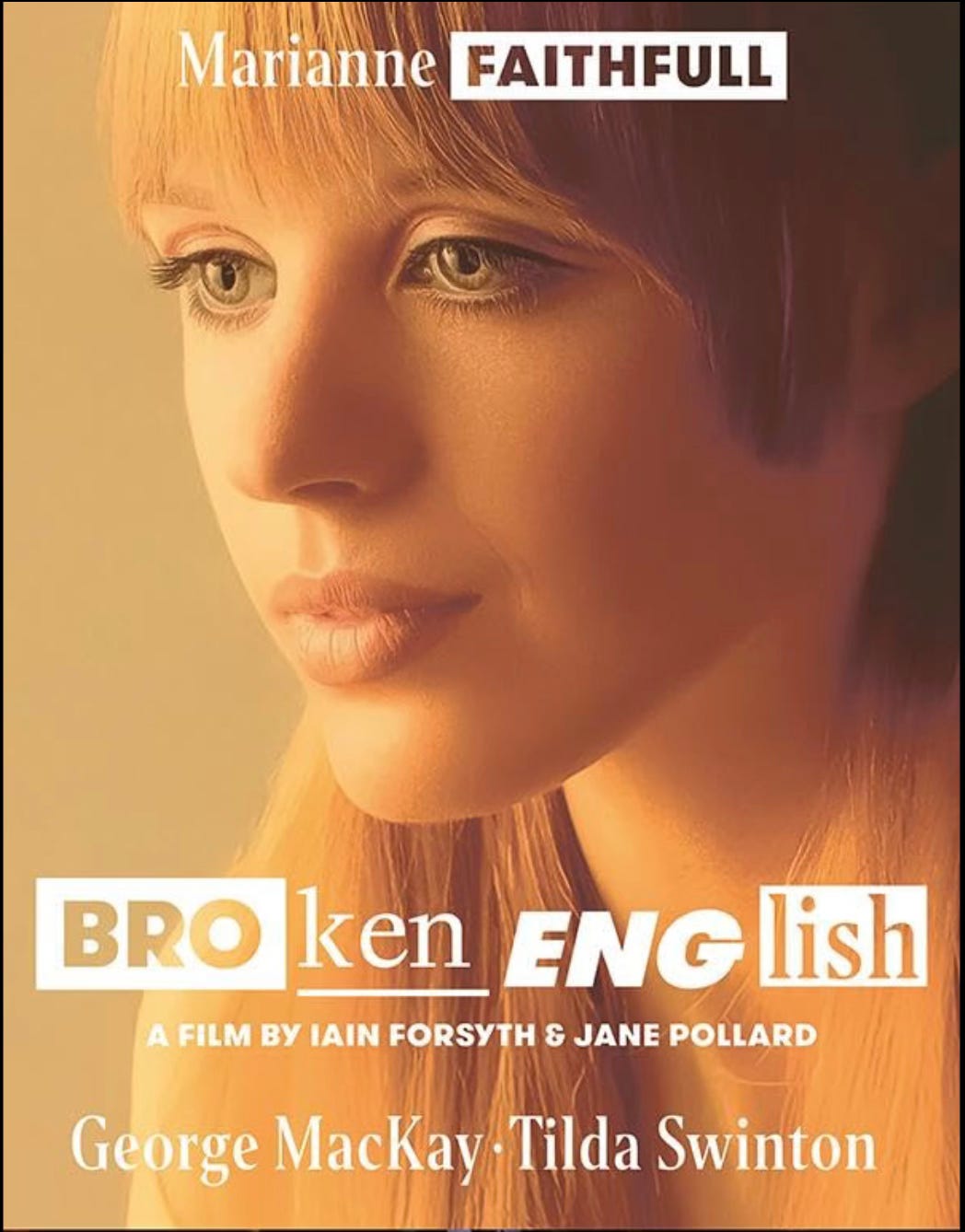
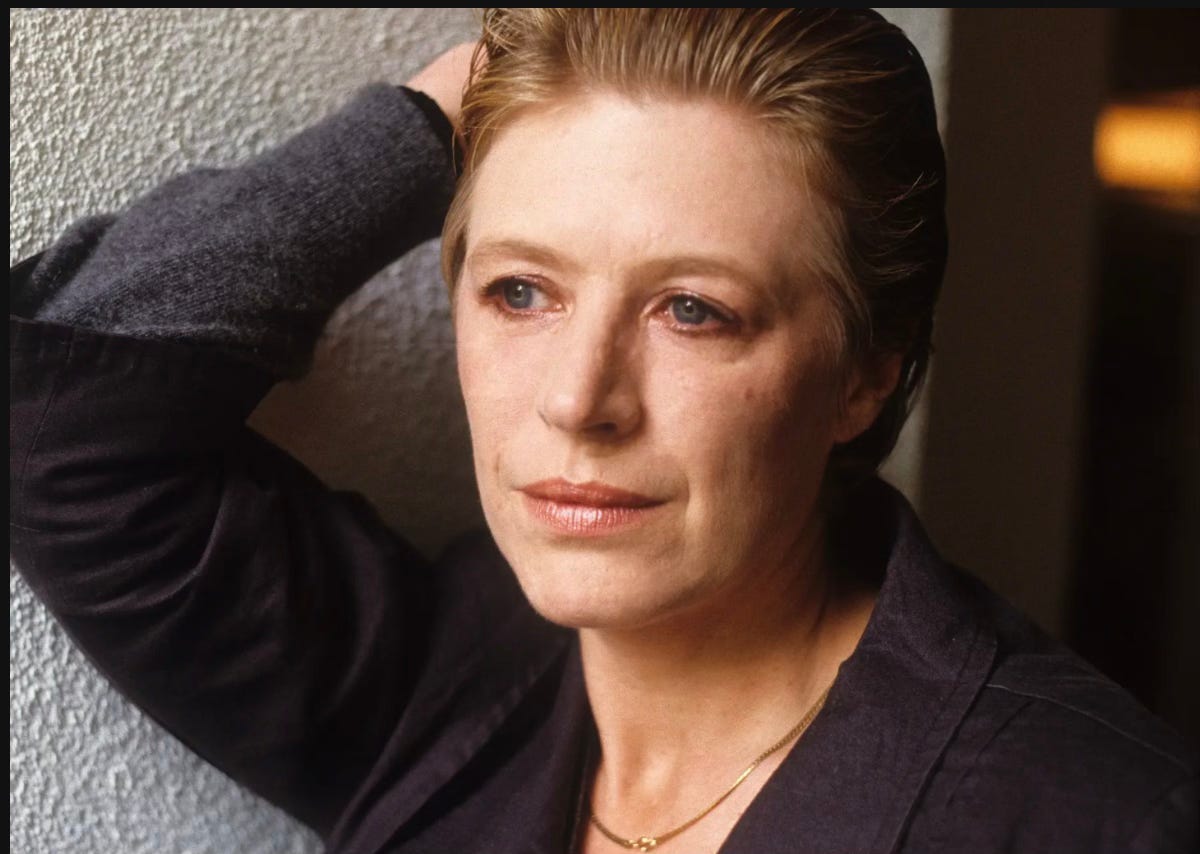
Faithfull herself comes across as thoughtful, insightful honest, piercingly funny, and brutally frank. Her self-awareness and growth over the decades are outstanding, in an industry known for clueless and self importance. If the movie were simply an hour and a half of her being interviewed by the filmmaker, I would have been perfectly happy. The interspersed archival interviews and footage help flesh out her story immensely. What surprised me most is how much of her work I didn’t really know. I was well aware of her as an artist and a personality, and liked her work. But I hadn’t grasped the full range of her music, nor her roots in theater. The film makes a compelling case for both, expanding the sense of who she is beyond the cultural shorthand.
What doesn’t always work is the film’s framing device: a fake “Institute of Not Forgetting,” (which is different than remembering, as we’re lectured at in one bit of pompous dialogue). The fake ministry is complete with staged archives, tape recorders, —because, of course, tape is cooler., There’s storing of records, serious, knowing nods, pencils tapping, nonexistent photo archives being “handled,” and an awful lot of coffee cups being set down as if to signal authenticity. While this structure does provide some helpful context for film, the whole lo-fi, faux-archival reclamation setup—something like a steam punk version of the Time Variance Authority in the Loki TV series—comes off as distracting and pretentious. It pulls focus from Faithfull’s extraordinary music and intelligence. (Is it ironic that a documentary about setting the record straight relies on so much fakery to make the point?) Similarly, while having contemporary artists perform her songs has a certain appeal, we would have been better served by simply hearing more of Faithfull perform her own music. Particularly as there is ample footage of her, which is often shown in snippet’s only.
Without these distractions, I could easily call this one of my favorite music documentaries. The parts I liked, I liked as much as anything. And I am now digging into her past work. So I still give the film high marks—I just wish the filmmaker had shown a more restraint and been a little less impressed with himself.